Home » Chimney Services » Carbon Monoxide
Carbon monoxide detection is one of the most important safety measures for any home with a fireplace or chimney. Hidden carbon monoxide (CO) issues can put your household at risk, especially during the heating season. Chimney Scientists provides science-driven inspections and precise diagnostics to protect families from carbon monoxide from fireplace systems in their homes across the Greater Philadelphia region and the Poconos.
Carbon monoxide is a colorless, odorless, poisonous gas created when fuel doesn’t burn completely. Fireplaces, whether gas or wood, are designed to vent carbon monoxide safely through the chimney. When something disrupts that process, CO can enter your living space.
Because CO is invisible and nearly impossible to detect without professional tools, every gas fireplace and carbon monoxide risk must be taken seriously. The same applies to any wood-burning fireplace and carbon monoxide exposure, especially in older homes where the chimney system may not meet modern safety standards.
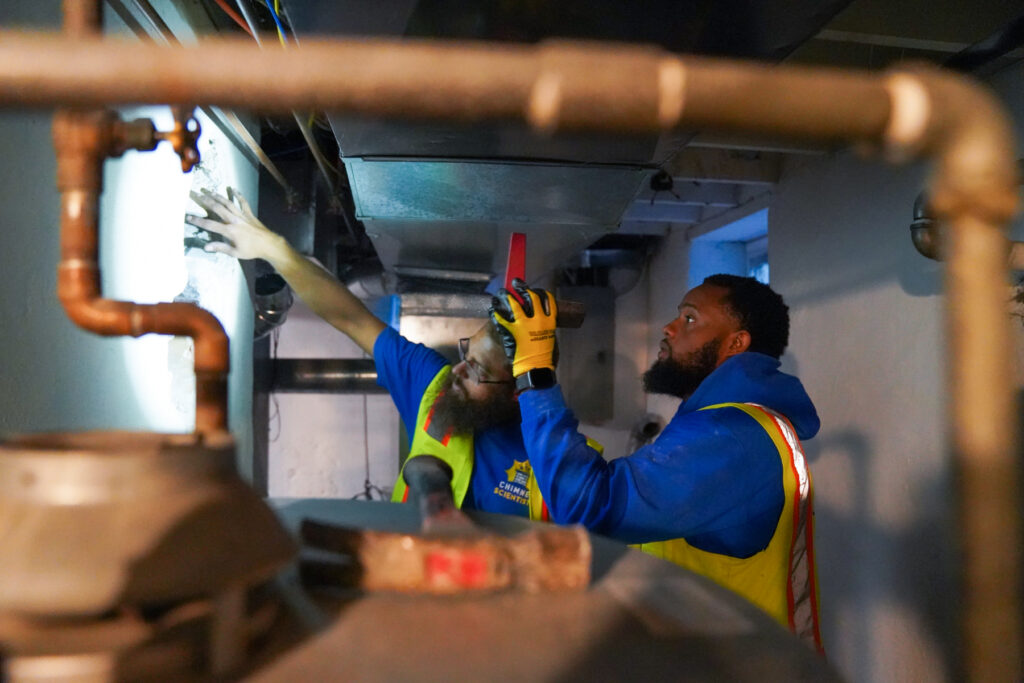
At Chimney Scientists, safety is not something we rush. Our inspectors only visit three homes per day—far fewer than the industry standard—so they have the time to evaluate every venting component, check for a carbon monoxide leak, and ensure systems are operating safely.
A carbon monoxide leak can occur for several reasons, many of which are hidden until a full diagnostic inspection is completed. Some of the most common causes include:
When these issues go unnoticed, homeowners may begin noticing subtle signs of carbon monoxide leak conditions long before an alarm sounds. These symptoms of CO poisoning may include headaches, dizziness, soot stains around the fireplace, smoke spillage, or unusual odors.
Homeowners often search for how to detect carbon monoxide, but the most reliable detection comes from comprehensive professional inspections. Carbon monoxide alarms are essential, but they don’t reveal the underlying problem, and they only activate once dangerous levels are already present.
Routine maintenance helps prevent a carbon monoxide leak by ensuring the entire venting system is clean, open, and structurally sound. In many cases, debris or creosote buildup is the root cause of carbon monoxide from fireplace systems, which is why annual chimney sweep services are recommended for all fuel types.
Chimney Scientists also performs data-backed inspections with infrared cameras, gas detectors, moisture meters, and chimney cameras. This scientific approach ensures nothing is left to guesswork, especially when family safety is at stake.
For thorough diagnostics, schedule a chimney safety inspection, which includes a full structural and venting assessment.
Homeowners choose Chimney Scientists because we bring scientific precision, rigorous safety standards, and unmatched quality control to every home we enter.
Here’s what sets us apart:
If you suspect a carbon monoxide leak, or if your fireplace hasn’t been inspected in over a year, now is the time to take action. CO exposure is silent, but preventable when your chimney is maintained, cleaned, and inspected by professionals who understand the scientific side of chimney performance.
Chimney Scientists proudly serves homeowners in:
Protect your home with data-driven carbon monoxide detection services backed by expert technicians and industry-leading safety standards. Schedule an inspection today.
Yes. Both gas and wood fireplaces can produce carbon monoxide. If the chimney is blocked, damaged, or not drafting correctly, CO can enter the living space. Regular inspections and maintenance significantly reduce this risk.
No. A carbon monoxide detector only measures CO levels, not natural gas. You should install both CO detectors and gas leak detectors if your home uses gas appliances.
Common causes include blocked chimneys, damaged flues, downdrafts, appliance malfunctions, and incomplete combustion. Any of these can allow CO to build up inside the home.
Possible signs of a CO leak include soot around the fireplace and smoky odors. You may also experience headaches, nausea, and frequent fatigue. Since symptoms of carbon monoxide poisoning can be subtle, professional testing is the safest option.
If you suspect a carbon monoxide leak, contact a qualified chimney professional to inspect the system. An HVAC technician can also check for carbon monoxide, but if there is a blockage in your chimney causing the problem, you will need to call a chimney company to repair it.
If your CO alarm goes off, exit the home, call 911, and allow responders to test air levels. Do not re-enter until they verify your home is clear. Afterward, schedule a chimney inspection to determine the cause.