
Carbon Monoxide

Carbon Monoxide Detection in Greater Philadelphia & Pocono Regions

Carbon monoxide detection is one of the most important safety measures for any home with a fireplace or chimney. Hidden carbon monoxide (CO) issues can put your household at risk, especially during the heating season. Chimney Scientists provides science-driven inspections and precise diagnostics to protect families from carbon monoxide from fireplace systems in their homes across the Greater Philadelphia region and the Poconos.

What Is Carbon Monoxide, and Why Can Fireplaces Produce It?

Carbon monoxide is a colorless, odorless, poisonous gas created when fuel doesn’t burn completely. Fireplaces, whether gas or wood, are designed to vent carbon monoxide safely through the chimney. When something disrupts that process, CO can enter your living space.

Because CO is invisible and nearly impossible to detect without professional tools, every gas fireplace and carbon monoxide risk must be taken seriously. The same applies to any wood-burning fireplace and carbon monoxide exposure, especially in older homes where the chimney system may not meet modern safety standards.

At Chimney Scientists, safety is not something we rush. Our inspectors only visit three homes per day—far fewer than the industry standard—so they have the time to evaluate every venting component, check for a carbon monoxide leak, and ensure systems are operating safely.

Common Causes of Carbon Monoxide Leaks From Fireplaces & Chimneys

A carbon monoxide leak can occur for several reasons, many of which are hidden until a full diagnostic inspection is completed. Some of the most common causes include:

  • Blocked chimney carbon monoxide issues: Creosote buildup, animal nests, broken flue tiles, and structural defects can prevent carbon monoxide from venting properly.
  • Damaged or misaligned flue: Cracks, missing tiles, or gaps in the flue allow CO to seep into the home. If your system has damage, chimney flue repair is essential to restoring proper draft.
  • Poor ventilation or downdrafts: Wind patterns, negative air pressure, and improperly sized chimneys can push CO back into the home rather than drawing it upward.
  • Incomplete combustion: Gas systems with burner issues and wood fireplaces burning improperly seasoned wood both produce higher CO levels.
  • Aging or historic chimneys: Homes built before 1929 often require specialized materials and repair methods. Chimney Scientists is one of the only local chimney companies trained in historic masonry products, ensuring your system is both safe and preserved correctly.

When these issues go unnoticed, homeowners may begin noticing subtle signs of carbon monoxide leak conditions long before an alarm sounds. These symptoms of CO poisoning may include headaches, dizziness, soot stains around the fireplace, smoke spillage, or unusual odors.

Carbon Monoxide leak

Why Professional Chimney Maintenance Matters for CO Safety

Homeowners often search for how to detect carbon monoxide, but the most reliable detection comes from comprehensive professional inspections. Carbon monoxide alarms are essential, but they don’t reveal the underlying problem, and they only activate once dangerous levels are already present.

Routine maintenance helps prevent a carbon monoxide leak by ensuring the entire venting system is clean, open, and structurally sound. In many cases, debris or creosote buildup is the root cause of carbon monoxide from fireplace systems, which is why annual chimney sweep services are recommended for all fuel types.

Chimney Scientists also performs data-backed inspections with infrared cameras, gas detectors, moisture meters, and chimney cameras. This scientific approach ensures nothing is left to guesswork, especially when family safety is at stake.

For thorough diagnostics, schedule a chimney safety inspection, which includes a full structural and venting assessment.
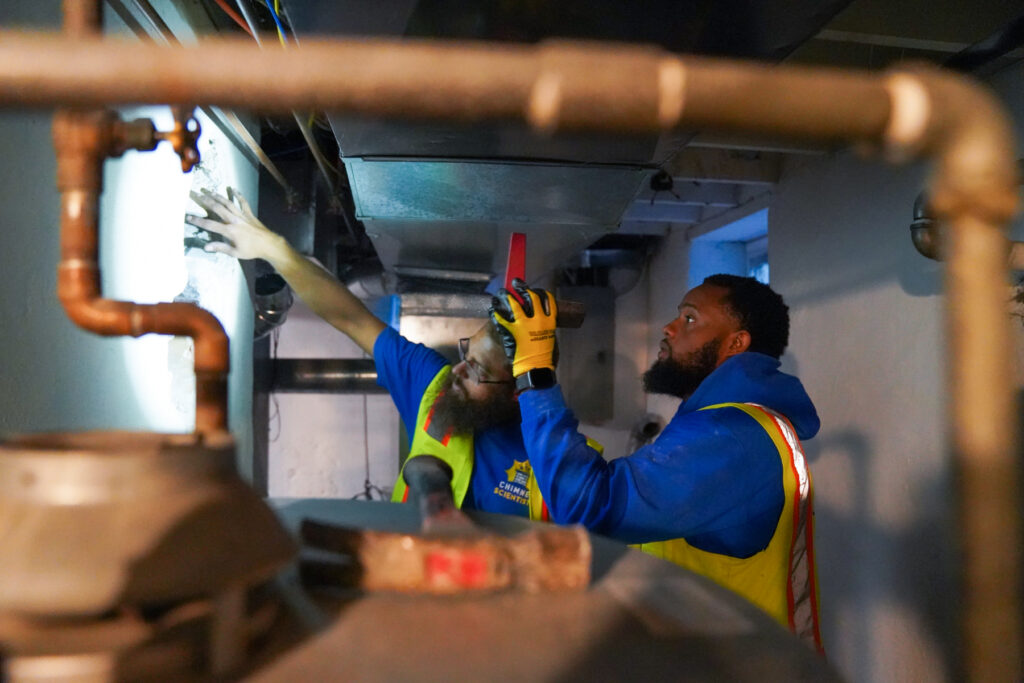
Two technicians from Chimney Scientists inspect a water heater and its chimney in a home in Norristown, PA, as part of carbon monoxide detection services

Why Trust Chimney Scientists for CO Detection?

Homeowners choose Chimney Scientists because we bring scientific precision, rigorous safety standards, and unmatched quality control to every home we enter.

Here’s what sets us apart:

  • A safety-first approach: Chimneys are life-safety systems. We perform carbon monoxide checks on every job, use advanced testing tools, and follow strict onsite protocols to protect your home.
  • True scientific precision: We use drones, camera scopes, infrared imaging, gas measurement tools, and other lab-style equipment to pinpoint issues others might miss.
  • Experienced, fully trained employees: No seasonal hires. No rushed work. Our technicians are full-time, highly trained, and passionate about delivering safe, clean, meticulous results.
  • Honesty and transparency: We don’t scare homeowners into repairs. Instead, we provide photos, videos, marked-up diagrams, and clear explanations backed by data.

Protect Your Family With Carbon Monoxide Detection Services

If you suspect a carbon monoxide leak, or if your fireplace hasn’t been inspected in over a year, now is the time to take action. CO exposure is silent, but preventable when your chimney is maintained, cleaned, and inspected by professionals who understand the scientific side of chimney performance.

Chimney Scientists proudly serves homeowners in:

  • Philadelphia County
  • Montgomery County
  • Bucks County
  • Chester County
  • Delaware County
  • Lehigh County
  • Monroe County
  • Carbon County

Protect your home with data-driven carbon monoxide detection services backed by expert technicians and industry-leading safety standards. Schedule an inspection today.

Frequently Asked Questions About Carbon Monoxide Detection

Can you get carbon monoxide poisoning from a fireplace?

Yes. Both gas and wood fireplaces can produce carbon monoxide. If the chimney is blocked, damaged, or not drafting correctly, CO can enter the living space. Regular inspections and maintenance significantly reduce this risk.

Will a carbon monoxide detector detect a gas leak?

No. A carbon monoxide detector only measures CO levels, not natural gas. You should install both CO detectors and gas leak detectors if your home uses gas appliances.

What causes a carbon monoxide leak?

Common causes include blocked chimneys, damaged flues, downdrafts, appliance malfunctions, and incomplete combustion. Any of these can allow CO to build up inside the home.

How can you tell if you have a carbon monoxide leak?

Possible signs of a CO leak include soot around the fireplace and smoky odors. You may also experience headaches, nausea, and frequent fatigue. Since symptoms of carbon monoxide poisoning can be subtle, professional testing is the safest option.

Who should you contact if you think you have a carbon monoxide leak?

If you suspect a carbon monoxide leak, contact a qualified chimney professional to inspect the system. An HVAC technician can also check for carbon monoxide, but if there is a blockage in your chimney causing the problem, you will need to call a chimney company to repair it.

What should you do if your CO alarm goes off?

If your CO alarm goes off, exit the home, call 911, and allow responders to test air levels. Do not re-enter until they verify your home is clear. Afterward, schedule a chimney inspection to determine the cause.

No Guesswork,
Just Chimney Science.

5-Star Results
Backed by Science

beachboy
20:29 08 Oct 25
Fantastic job! We had an old wood burning fireplace converted to gas with a gas stove insert. It’s a one stop shop they did absolutely everything ran new gas line installed electric new stove and stainless chimney liner. Quick clean and efficient and everyone was nice.
Susan T.
16:38 03 Oct 25
We didn't know what was wrong with our chimney, but could see moisture was damaging the plaster in the ceiling around it. We consulted a roofer who said the issue was the flashing (on the roof just above the room where damage was visible). New flashing had absolutely no effect. Talked to another roofer who admitted he was stumped and recommended a company called "Chimney Scientists". Best recommendation EVER. The Chimney Scientist inspector recognized the problem immediately: unfortunate repairs in the 1980s to this chimney built in 1900 used a modern type of mortar (Portand cement) that trapped moisture inside our chimney, forcing water out through brick (and then into surrounding ceiling plaster). This past week Chimney Scientists rebuilt our chimney in the top floor of our house and up through the roof using historic lime-based mortar. They found reclaimed brick that closely matches our original brick for the exposed chimney inside the house. Above the roof, they used new brick that will resist the elements for a long, long time. End result: a gorgeous, healthy chimney inside and out. During the job, they provided thorough protection around their work area. At the end of the job, they cleaned up to perfection. All along the way, they cheerfully provided crystal clear and detailed explanations. Maybe best of all: they LISTEN. Whenever we had any concerns or questions, we were heard and any needed adjustments were made right away. The name Chimney Scientists isn't just great branding: these guys really DO understand the science behind chimneys and they take great pride in skillfully solving chimney problems. 10 stars out of 5.
Eric G.
14:44 03 Oct 25
Chimney Scientists do a great job. Antonio is a great service person—super friendly and professional.
Robert G.
19:09 02 Oct 25
Professional, personable service.
Nadine K.
15:59 25 Sep 25
We have used Chimney Scientists several times for chimney inspections, cleaning, and masonry repair and weather proofing. They have always been professional and have done an excellent job.
Kylie K.
19:17 16 Sep 25
Antonio is so great! A wonderful and kind human who is always smiling. His work is fantastic!
Jerry T.
20:33 15 Sep 25
Mark was a nice guy. He cleaned and inspected the unit thoroughly.