Home » Chimney Services » Creosote Removal & PCR
Glazed creosote is a silent threat to your chimney’s safety, and once it forms, it can fuel a destructive fire. At Chimney Scientists, we offer PCR chimney treatment to remove hardened creosote and restore your chimney’s integrity. Our deep chimney creosote cleaning is designed for serious buildup that normal sweeping won’t touch. We serve homeowners across Greater Philadelphia and the Poconos, applying industry-leading processes to deliver real results that remove odors from your chimney, restore its performance, and improve safety.
Creosote buildup in your chimney starts as light soot but can harden over time into a thick, tar-like glaze known as Level 3 creosote. This glazed form is extremely flammable, retains heat, and clings with chemical attachment to flue walls, making it nearly impossible to remove with standard brushes. Because of its danger, we use scientifically-backed Level 3 creosote removal to keep your home safe.
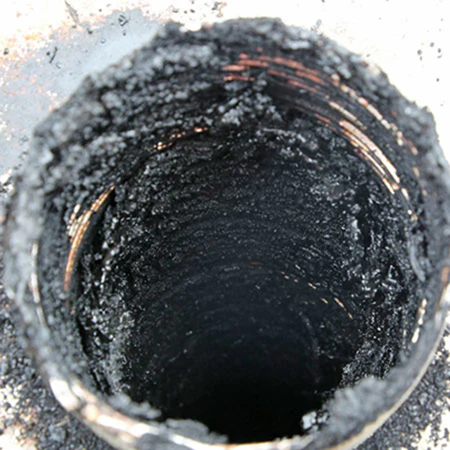
PCR stands for Poultice Creosote Remover, a chemical treatment engineered to dissolve and absorb glazed creosote safely. When carefully applied, PCR breaks the bond between the creosote and your liner, allowing the hardened glaze to flake off and be swept out without damaging the flue.
Here’s how PCR works:
Because PCR can expose underlying damage, we often pair it with chimney flue repair when needed.
Using PCR to remove the highly flammable creosote from your fireplace and chimney is a process that requires two visits to your home. Here’s what you can expect during each visit:
We only activate PCR treatment when less invasive cleaning has failed or when inspection confirms glazed buildup.
PCR is not a general cleaning—it’s reserved for serious creosote deposits that require chemical action, not just physical brushing. Here are some signs that you have stage 3 creosote in your chimney and may need PCR treatment:
PCR offers a number of advantages for your chimney and fireplace:
Chimney Scientists is proud to offer PCR chimney creosote cleaning across the following counties in Pennsylvania:
Our local knowledge and experience with weather, wood-burning habits, and chimney systems make our crews uniquely qualified to deliver safe PCR treatments in your area.
Don’t let Level 3 creosote threaten your chimney system. Schedule an inspection to determine if PCR treatment is needed or if a standard chimney cleaning will suffice. Our process is fully documented and guaranteed to be performed with care, precision, and respect for your home. We’ll provide a transparent quote and guide you through every step toward a safer, cleaner chimney.
Contact Chimney Scientists today to book your appointment and protect your home from creosote risks.
Level 3 creosote (also called glazed creosote) is a hardened, glossy deposit that resists standard sweeping. It’s more flammable and difficult to remove, which increases fire risk.
PCR treatment removes glazed creosote by chemically dissolving or loosening the glaze, allowing it to flake off with minimal force. The dissolved creosote adheres to the PCR, which can then dry and fall away, leaving a cleaner flue.
When applied by experienced professionals, PCR is safe for clay, ceramic, and stainless steel liners. Because it’s gentler than aggressive mechanical methods, it reduces the risk of tile chipping or liner damage.
No, we don’t use PCR on every chimney. PCR is used only when glazes (Level 3 buildup) are present. If inspections reveal lighter deposits, we first attempt standard chimney cleaning techniques before recommending PCR.
PCR requires two visits and a drying period of 24–48 hours after the first visit. We apply the chemical on day one, allow it to dry, then return to sweep and inspect on day two.
No, PCR will not stop future creosote buildup; it only treats the existing glaze. To reduce future buildup, use well-seasoned wood, maintain proper draft, and schedule regular chimney inspection and cleaning services.