
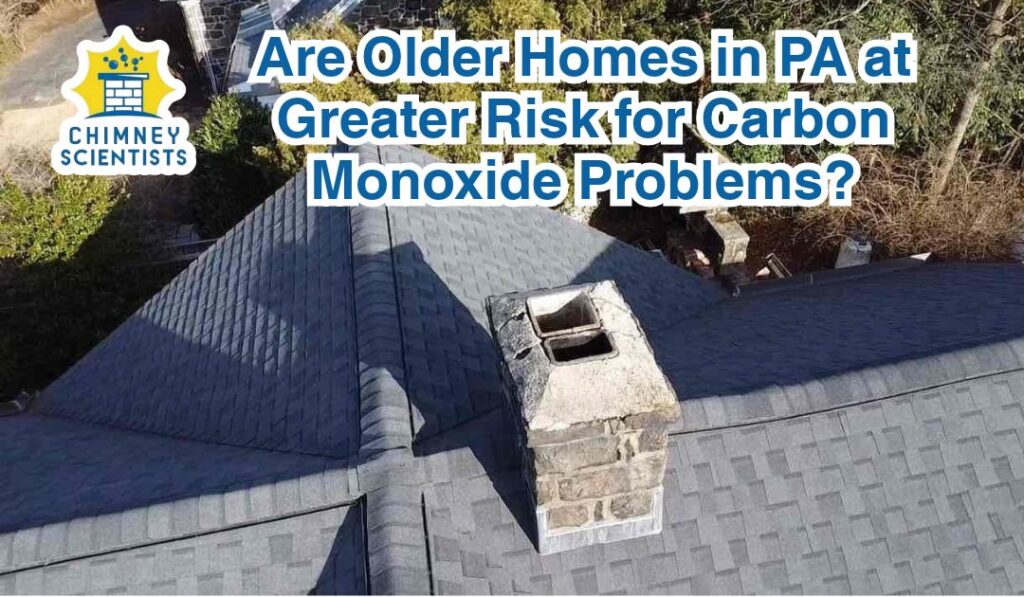
Could your home’s chimney be creating a carbon monoxide risk without you knowing it? It’s a concern that many homeowners overlook, especially if they don’t have a traditional fireplace.
At Chimney Scientists, we regularly inspect chimneys that vent furnaces, boilers, and water heaters. These systems carry exhaust gases out of the home. However, aging chimney liners, improper venting, and changes to heating equipment can create potentially dangerous conditions through chimney backdrafting.
To better understand carbon monoxide in older homes and the chimney problems that can contribute to it, we analyzed 3,617 customer homes from our 2025 ServiceTitan job records. The findings revealed a noticeable difference between older and newer homes, particularly when it came to recommendations for heater chimney liners.
Here’s what we found, why it matters, and what Pennsylvania homeowners should know about protecting their homes.
What Chimney Scientists Found in More Than 3,600 Pennsylvania Homes
Our analysis examined completed jobs and written estimates from Chimney Scientists customers throughout the Greater Philadelphia region in 2025.
One of the clearest findings was that older homes were approximately twice as likely to receive a recommendation for a heater chimney liner compared with newer homes.
Older Homes Were Twice as Likely to Receive a Heater-Liner Recommendation
| Home Age | Percentage Receiving a Heater-Liner Estimate |
| Built before 1980 | 22.4% |
| Built after 1980 | 10.9% |
In other words, roughly one in five older customer homes received an estimate for chimney liner work associated with heating equipment, compared with about one in nine newer homes.
This doesn’t mean those homes had confirmed carbon monoxide leaks. Rather, it shows how frequently our technicians identified conditions that led them to recommend liner work.
About One in Five Older Homes Inspected Received a Liner Recommendation
When we looked specifically at homes built before 1980 that received chimney inspection or cleaning services, 20.7% received a heater-liner estimate.
This finding is particularly relevant for homeowners in Philadelphia, Montgomery County, Bucks County, Chester County, and Delaware County, where older masonry chimneys are common.
While our findings don’t represent every Pennsylvania home, they highlight why the condition of an older chimney deserves attention, even when the homeowner hasn’t noticed a problem.
Carbon Monoxide and Backdrafting Findings in Pre-1980 Homes
| Finding | Liner Recommended | No Liner Recommended |
| CO or backdrafting mentioned | 25.4% | 7.8% |
| Backdrafting or CO escape documented | 4.3% | 1.8% |
Source: Chimney Scientists’ 2025 ServiceTitan visit summaries. Percentages reflect homes with available visit summaries, not all homes inspected.
While these findings show that carbon monoxide and backdrafting concerns were discussed and documented more often when liner work was recommended, they don’t tell us the actual percentage of homes experiencing these problems. Not every visit had a summary, and individual detector readings weren’t available in the data.
For homeowners, the takeaway is that chimney venting problems aren’t always obvious. A furnace or water heater may appear to be working normally even when its chimney needs attention.
Why Older Homes Face Greater Chimney Venting Risks
Many older homes were built with masonry chimneys designed for heating equipment that worked differently from today’s appliances. As those systems age or are replaced, the original chimney may no longer be properly suited to the equipment connected to it. This can lead to poor drafting and other venting problems, helping explain why our technicians recommend chimney liner work more frequently in older homes.
How Furnaces, Boilers, and Water Heaters Use Chimneys
When a natural gas- or oil-burning furnace, boiler, or water heater operates, it produces exhaust gases that need to leave the home safely. In many older houses, those gases travel through a masonry chimney. A properly functioning chimney liner helps contain the exhaust and carry it outdoors.
If the liner is damaged, deteriorating, or improperly sized, the chimney may not vent as intended. This can contribute to furnace venting problems and increase the risk of carbon monoxide from furnace exhaust entering the home.
Depending on the condition of the system, chimney relining may be recommended to provide a suitable passage for the appliance’s exhaust.
What Happens When Heating Equipment Is Replaced?
One issue homeowners may not realize is that replacing a gas appliance can change how the chimney works. For example, an older furnace and water heater might originally share the same chimney. When the furnace is replaced with a high-efficiency model that vents directly outdoors, the water heater may be left using the original chimney by itself.
That chimney may now be too large for the water heater’s relatively small amount of exhaust. Without enough heat to establish proper draft, exhaust gases may struggle to travel upward and out of the home.
In these situations, a properly sized water heater chimney liner may be needed. Similarly, a furnace chimney liner should be evaluated when heating equipment is replaced to make sure it is compatible with the new system.
What Is Chimney Backdrafting, and Why Is It Dangerous?
Under normal conditions, warm exhaust gases rise through the chimney and exit outdoors. Chimney backdrafting occurs when those gases spill back into the home instead of venting properly.
Several conditions can contribute to backdrafting, including an improperly sized chimney, blockages, inadequate combustion air, or pressure differences inside the house.
For example, exhaust fans and other appliances can affect indoor air pressure, sometimes making it more difficult for a chimney to establish proper draft.
When a fuel-burning appliance backdrafts, combustion gases may enter living spaces. Depending on the appliance and operating conditions, those gases can include carbon monoxide.
How Can Chimney Problems Lead to Carbon Monoxide in Your Home?
Carbon monoxide is a colorless, odorless gas produced when fuel doesn’t burn completely. Gas and oil heating appliances can produce carbon monoxide, making proper combustion and venting essential.
If a chimney is blocked, damaged, or backdrafting, combustion gases may enter the home rather than exiting outdoors. This can create risks involving carbon monoxide from furnace exhaust, boilers, or gas water heaters.
The danger is that homeowners may not realize anything is wrong. Carbon monoxide itself has no smell, and venting problems don’t always produce visible smoke or other obvious warning signs.
This is why understanding the connection between carbon monoxide from chimneys and heating equipment is so important, particularly in older homes.
While our ServiceTitan findings represent chimney liner recommendations, they’re not confirmed carbon monoxide detections. The data highlights potential venting concerns but doesn’t establish how many homes had measurable carbon monoxide exposure.
Warning Signs of Furnace and Water Heater Venting Problems
Although some chimney venting problems develop without obvious symptoms, there are signs of chimney backdrafting and other venting issues homeowners should take seriously.
These may include:
- Soot or discoloration: Dark staining around an appliance or vent connection may indicate combustion or venting problems.
- Moisture or corrosion: Rust, condensation, or deterioration around vent pipes can suggest that exhaust isn’t moving through the system as intended.
- Unusual odors: Persistent exhaust or smoky odors may indicate a venting issue, although carbon monoxide itself is odorless.
- Visible chimney deterioration: Cracked masonry, damaged liners, or falling debris may indicate problems that require inspection.
- Carbon monoxide alarm activation: A sounding CO alarm is an emergency warning that requires immediate action.
Headaches, dizziness, nausea, and unusual fatigue can also be symptoms of carbon monoxide exposure. If you suspect exposure or your CO alarm sounds, get everyone outside for fresh air immediately and call 911. Do not reenter until emergency responders say it’s safe.
How to Reduce Carbon Monoxide Risks in Your Home
Carbon monoxide prevention starts with properly maintained heating systems, safe chimney venting, and working CO alarms. Homeowners can’t always identify venting problems themselves, but there are practical steps that can help reduce the risks.
- Install carbon monoxide alarms. Keep working CO alarms on every level of your home and outside sleeping areas, following manufacturer instructions and applicable requirements.
- Schedule regular heating equipment maintenance. Have furnaces, boilers, and hot water heaters serviced according to manufacturer recommendations.
- Have your chimney evaluated. A professional chimney inspection can identify liner deterioration, blockages, and other conditions that may affect venting.
- Check venting when replacing appliances. If you’re upgrading a furnace, boiler, or water heater, make sure the existing chimney is suitable for the new equipment.
- Address recommended repairs. Don’t ignore a damaged or improperly sized chimney liner simply because the heating appliance still appears to work.
These precautions are especially important in older homes where heating equipment may have been replaced several times while the original chimney remains in use.
What These Inspection Findings Mean for Pennsylvania Homeowners
Our findings reinforce an important point: a chimney doesn’t need to serve a fireplace to be an essential part of your home’s safety.
Many homeowners think about chimney maintenance only when they burn wood. However, masonry chimneys connected to furnaces, boilers, and water heaters also need to vent combustion gases safely.
The fact that older homes in our customer records were roughly twice as likely to receive heater-liner estimates suggests that aging chimney systems and changes to heating equipment deserve closer attention.
It doesn’t mean every older home has a dangerous chimney or needs a new liner. It does mean that homeowners should understand how their heating equipment vents and whether that venting system has been properly evaluated.
Schedule a Professional Chimney Inspection With Chimney Scientists
If you live in an older Philadelphia-area home, particularly one where the furnace, boiler, or water heater has been replaced, it’s worth making sure the chimney is still suitable for the equipment connected to it.
Chimney Scientists uses specialized cameras, diagnostic equipment, and detailed photo documentation to assess chimney conditions and explain our findings. Our goal is to help homeowners understand potential problems and make informed decisions about necessary repairs.
Contact Chimney Scientists to schedule a chimney inspection and make sure your heating equipment has a properly functioning venting system.
About This Data
These findings are based on Chimney Scientists’ ServiceTitan job and estimate records from January through December 2025, covering 3,617 customer homes in the Greater Philadelphia region. Percentages reflect written recommendations for heater chimney liners, not confirmed carbon monoxide incidents. Because the analysis includes homes where customers scheduled chimney services, the results should not be interpreted as representative of all Pennsylvania homes.
FAQs About Carbon Monoxide and Chimney Safety
Can Carbon Monoxide Come From a Furnace Chimney?
Yes. If a furnace doesn’t burn fuel properly or its exhaust isn’t vented safely, carbon monoxide from furnace operation can enter the home. Blocked, damaged, or improperly sized chimney systems can contribute to dangerous venting conditions.
Can a Gas Water Heater Cause Carbon Monoxide Problems?
Yes. Carbon monoxide from water heater operation is a potential danger when the appliance isn’t burning fuel or venting properly. Backdrafting, chimney blockages, and damaged vent connections can allow combustion gases to enter the home.
Does Replacing a Furnace Affect the Chimney Liner?
Yes, it can. If a new furnace vents differently from the old one, the existing chimney may no longer be properly sized for the appliances that remain connected. The chimney should be evaluated whenever heating equipment is replaced.
How Do I Know If My Chimney Is Backdrafting?
Possible signs include soot, unusual exhaust odors, moisture near vent connections, or combustion gases spilling from the appliance. However, backdrafting isn’t always obvious, so professional testing is important when a problem is suspected.
Do Older Homes Need More Frequent Chimney Inspections?
Older homes don’t automatically require more frequent inspections solely because of their age. However, aging liners, previous appliance replacements, and older masonry construction can create additional concerns. Annual chimney inspections are generally recommended, with additional evaluation when heating equipment is changed or venting problems are suspected.