
There’s nothing quite like a crackling fire on a cold day, but getting that fire started (and keeping it burning) begins with proper preparation. Whether you’re new to wood-burning fireplaces or simply looking to improve your technique, understanding how to stack firewood and burn it correctly can make your fires easier to light, more efficient, and safer.
Below, we’ll cover the best way to stack wood in a fireplace, common mistakes to avoid, and simple tips for building a long-lasting fire.
Why Proper Firewood Matters
Before discussing how to stack wood for a fire, it’s important to start with the wood itself. Even the best fire-building technique won’t perform well if you’re using poor-quality firewood.
The moisture content of your wood is perhaps the most important factor. The ratio of water weight in the wood to dry weight should be 25% or less. Wet or unseasoned wood is more difficult to ignite, produces excessive smoke, and contributes to creosote buildup inside your chimney.
When purchasing firewood, ask the supplier about its moisture content. If you want to verify it yourself, quality moisture meters, such as a Delmhorst Moisture Meter, can provide an accurate reading.
Burning dry, seasoned wood not only creates a better fire but also reduces the amount of creosote that accumulates inside your chimney, making routine chimney cleaning even more effective.
How to Stack Firewood in a Fireplace
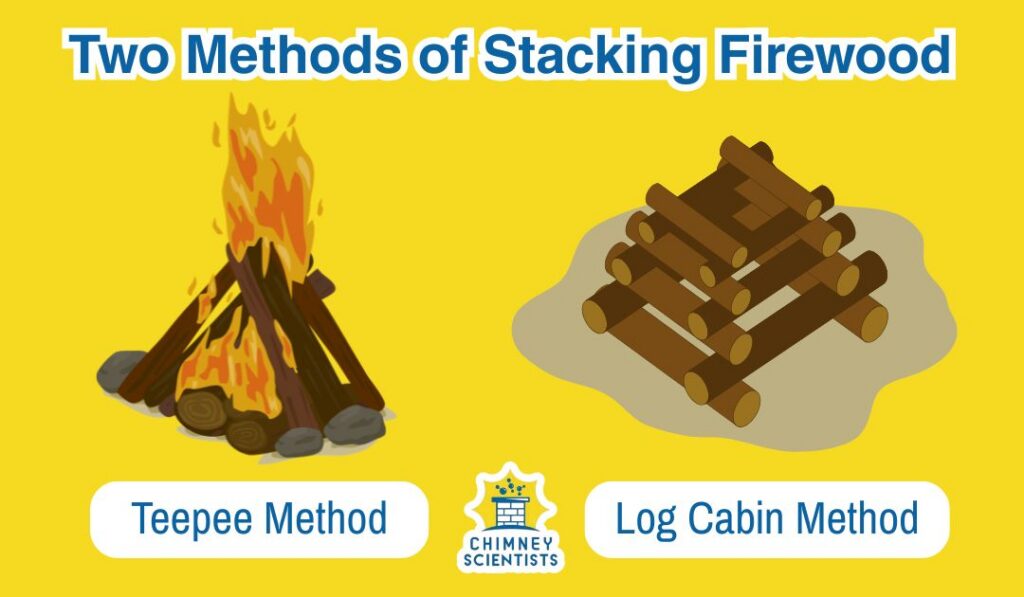
Full disclosure, there are actually many ways to properly stack your firewood. If you’re wondering how to stack wood in a fireplace, you’re probably most familiar with these two methods.
Teepee Fire
Stack three or four pieces of kindling in the center. Lean small twigs and wood in a teepee shape around it, placing them vertically with the ends meeting in the center. Leave space between the pieces of wood, as well as a designated opening to light the kindling.
This design produces a flame quickly, and the logs naturally collapse inward as they burn.
Log Cabin Fire
Lay two pieces of split wood parallel to each other a short distance apart. Stack a second layer of parallel logs perpendicular to the first layer. Two to three layers are typically enough to establish a solid fire.
The log cabin design promotes steady airflow and provides a stable structure that burns evenly.
There are a number of other stacking methods, such as a Lean-To Fire or a Hunter’s Fire. Regardless of the style you choose, the best way to stack firewood is one that allows plenty of airflow between the logs.
The Combustion Triangle
The reason airflow matters comes down to what’s known as the combustion triangle, sometimes called the fire triangle.
To create and maintain a fire, you need three elements working together:
- Oxygen
- Heat (energy)
- Fuel
If any one of these elements is removed, the fire will go out. Understanding this simple concept makes it much easier to understand how to stack firewood in a fireplace and why spacing between the logs is so important.
Tips for a Safe and Effective Fire
Regardless of the stacking method you decide to use, there are several key tips for building a successful fire.
- Leave space between the logs. Proper airflow allows the fire to burn hotter and more efficiently.
- Use a quality fire starter. Our team’s preferred options include:
- Store-bought fire starters such as Duraflame.
- Properly dried kindling. Rather than collecting twigs outdoors, purchase kindling or dry your own for at least 12 months before use.
- A handheld blowtorch for quick ignition.
- Start with smaller pieces of wood. Split your first log into three or four smaller sections using a hatchet. Smaller pieces ignite much more easily.
- Build gradually. Once the fire is established, continue adding larger pieces of wood while maintaining space between the logs. It should take approximately 15–20 minutes to establish a healthy fire.
These simple techniques are often the best way to stack wood for a fire that burns efficiently and produces less smoke.
Common Mistakes When Starting a Fire
Even experienced fireplace owners occasionally make mistakes that can lead to smoky fires or poor performance.
Some of the most common include:
- Burning wet or freshly cut firewood
- Stacking logs too tightly together
- Using oversized logs before the fire is established
- Forgetting to fully open the damper
- Trying to rush the fire-building process
Avoiding these mistakes will make it much easier to build a fire that lights quickly and burns cleanly.
How to Keep a Fire Burning
Once your fire is established, resist the temptation to overload the fireplace with wood. Adding too many logs at once can reduce airflow and smother the fire.
Instead:
- Add one or two logs at a time.
- Leave small gaps between the logs.
- Wait until the previous logs are burning well before adding more fuel.
- Use seasoned hardwood whenever possible for longer burn times.
If you frequently use your fireplace for supplemental heat, upgrading to an efficient wood fireplace insert can dramatically improve heat output and overall efficiency.
Putting Out Your Fire
Whether you plan to start a fire indoors or outdoors, the process for extinguishing it is essentially the same.
When you are finished with your fire, remove at least one side of the combustion triangle. If the fire runs out of fuel, it will eventually smolder and go out. You can also cool the fire with water or remove the oxygen using a professional fire blanket.
Always allow ashes to cool completely before disposing of them, and store them in a metal container away from combustible materials.
Burn Safely All Season Long
Building a great fire starts with proper technique, but it also depends on having a fireplace and chimney that are clean and operating safely. Before the heating season begins, consider scheduling a professional chimney inspection to identify any issues that could affect performance or safety.
A well-maintained chimney helps your fireplace draft properly, reduces creosote buildup, and allows you to enjoy every fire with greater confidence.
Frequently Asked Questions About Stacking Firewood
What is the best way to stack wood in a fireplace?
The best way to stack wood in a fireplace is to leave space between the logs so air can circulate freely. Teepee and log cabin arrangements are two of the most popular and effective methods.
How do you stack firewood to start a fire?
Start with dry kindling in the center, then arrange small pieces of wood using a teepee or log cabin design. Once the fire is established, gradually add larger logs while maintaining airflow.
Why is airflow important when stacking firewood?
Oxygen is one of the three elements of the combustion triangle. Without adequate airflow between the logs, the fire won’t burn efficiently.
Can I burn freshly cut firewood?
No. Freshly cut wood contains too much moisture, making it difficult to light and causing excessive smoke and creosote buildup.
How long should it take to establish a fire?
With dry wood and proper stacking, a fire should become well established in approximately 15–20 minutes.